
Address: No. 87 Dingjiaqiao, Nanjing
Zip Code: 210009
Copyright © School of Medicine, Southeast University
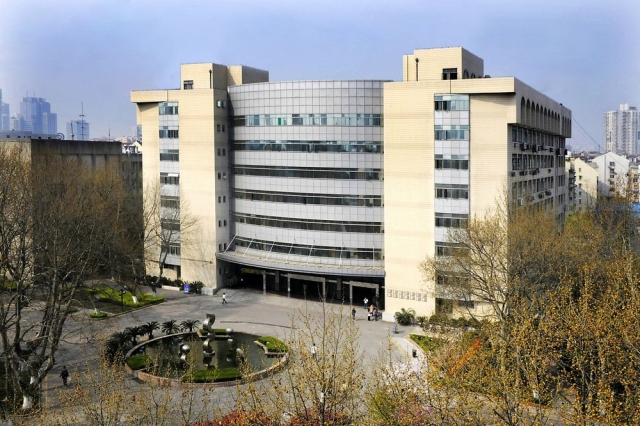
The history of the School of Medicine, Southeast University, began with the establishment of the Medical School of National Central University in 1935, though its academic roots can be traced back to the same year. Following a series of institutional transformations—including transitions to the Medical School of Nanjing University, the Military Medical School of the East China Military Region, the Third Military Medical School, the Fifth Military Medical University, and ultimately Nanjing Railway Medical College, the School was formally integrated into Southeast University in 2000, marking a new chapter in its distinguished legacy.
With a legacy spanning nine decades, generations of distinguished medical scholars, including Qi Shounan, Cai Qiao, Zheng Ji, Lin Ji, Pan Mingzi, Jiang Sichang, and Zhang Disheng, have contributed to its rich academic and humanistic legacy. The School has since educated thousands of outstanding graduates, including academicians of the Chinese Academy of Sciences such as He Lin, Yang Huanming, Fan Jia, and Teng Gaojun, as well as internationally recognized scholars including Harvard Professors Li Jiaqiang, Chen Changyi, and Yao Qizhi.
The School adheres to the philosophy of "academic excellence first, students foremost, and faculty as the foundation." Leveraging the comprehensive strengths of Southeast University, the School offers a complete talent cultivation system spanning bachelor's, master's, doctoral, and postdoctoral programs. All undergraduate programs, including Clinical Medicine, Clinical Medicine (5+3 Integrated Program), Medical Imaging & Artificial Intelligence, and Clinical Laboratory Science & Biomedical Engineering, are designated as National First-Class Undergraduate Programs. The School is home to 5 first-level doctoral disciplines, 2 postdoctoral research stations, and 7 first-level master's programs.
The School is supported by national-level platforms including the National Innovation Platform for Integration of Medical Engineering Education (Southeast University), the State Key Laboratory of Digital Medical Engineering, and ministerial and provincial-level platforms such as the Overseas Expertise Introduction Project for Discipline Innovation (111 Project), the Nurturing Center of Jiangsu Province for State Laboratory of AI Imaging & Interventional Radiology, and the Jiangsu Provincial Key Laboratory of Critical Care Medicine. A total of eight medicine-related disciplines rank within the top 1% globally according to Essential Science Indicators (ESI) metrics, with Clinical Medicine ranking within the top 1‰ and Pharmacology and Toxicology approaching the top 1‰ threshold.
The School's faculty comprises 169 academic doctoral supervisors, 106 clinical doctoral supervisors, and 394 master's supervisors, including over 40 nationally recognized leading talents and academicians. Over the past five years, the School has secured 79 national-level and 28 provincial/ministerial-level research projects, with total research funding reaching approximately 91.62 million RMB. It publishes an average of nearly 240 SCI papers annually, including an average of 63 highly cited papers per year—among which one paper was published in Science and a research image was selected as one of the best science images of 2024 by Nature's picks. The School has been granted over 10 authorized invention patents annually, with technology transfer contract amounts exceeding 160 million RMB. The affiliated Zhongda Hospital, one of China's first nationally accredited top-tier hospitals and National Clinical Teaching and Training Demonstration Centers, features 8 National Key Clinical Specialties—including Critical Care Medicine, Radiology, Cardiology, and Nephrology—with Critical Care Medicine and Interventional Radiology designated as National Quality Control Centers by the National Health Commission.
The School has established partnerships with leading institutions across the United States, Europe, and Asia. International students from over 40 countries constitute more than 15% of total enrollment, fostering a vibrant multicultural campus environment. Students have consistently excelled in national competitions, earning top honors at the China International College Students' Innovation Competition, the "Internet+" National Innovation and Entrepreneurship Competition, and the "Challenge Cup" Academic Science Competition. Graduates consistently rank among the top performers in the National Medical Licensing Examination, reflecting the School's commitment to cultivating future medical leaders.
After nearly 90 years of growth and development, the School stands as a distinguished institution in medical education, scientific research, and talent cultivation. Building on its rich heritage and academic legacy, the School remains committed to the pursuit of scientific excellence and innovation, contributing to the advancement of healthcare in China and strengthening its global influence in medical education and research.
Address: No. 87 Dingjiaqiao, Nanjing
Zip Code: 210009
Copyright © School of Medicine, Southeast University